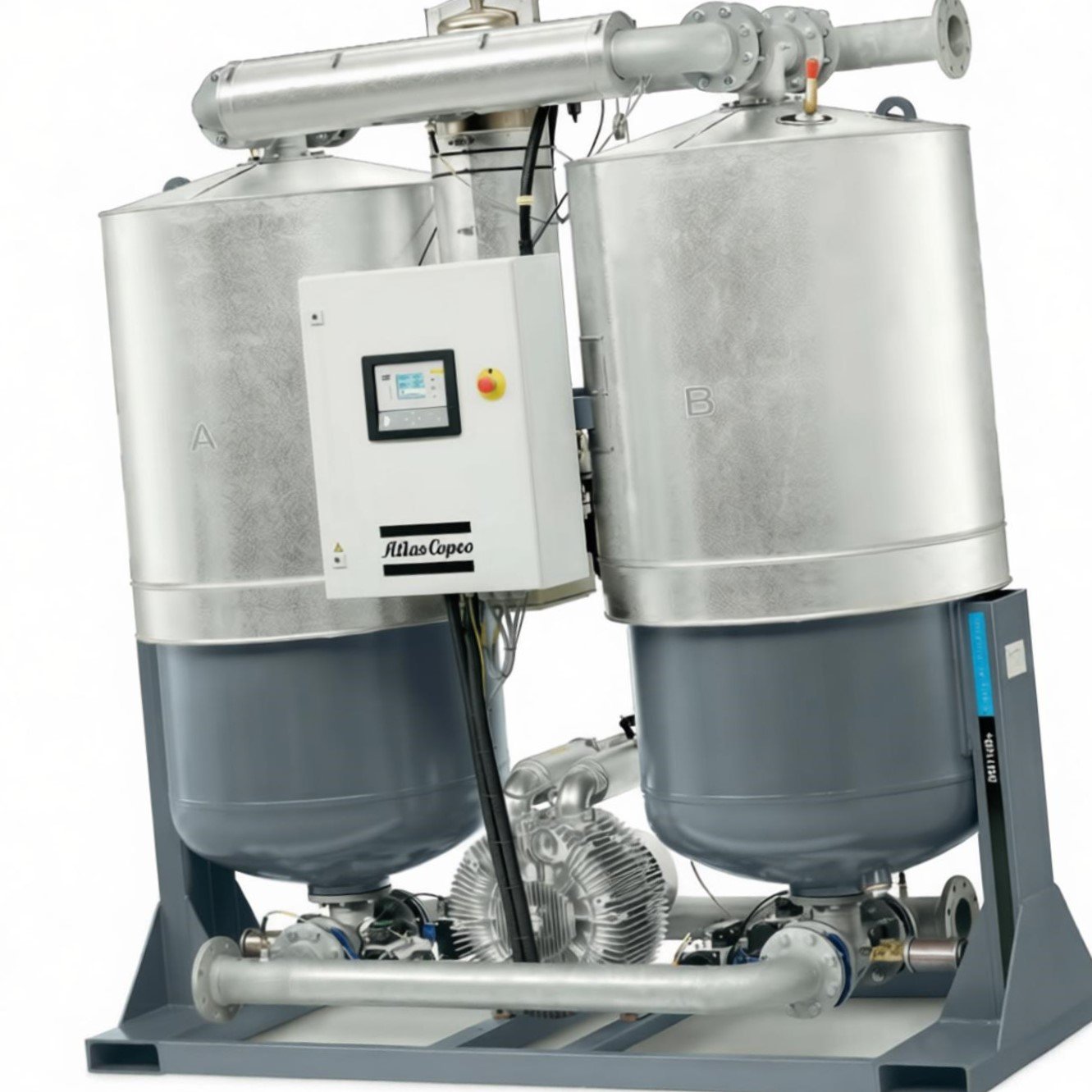
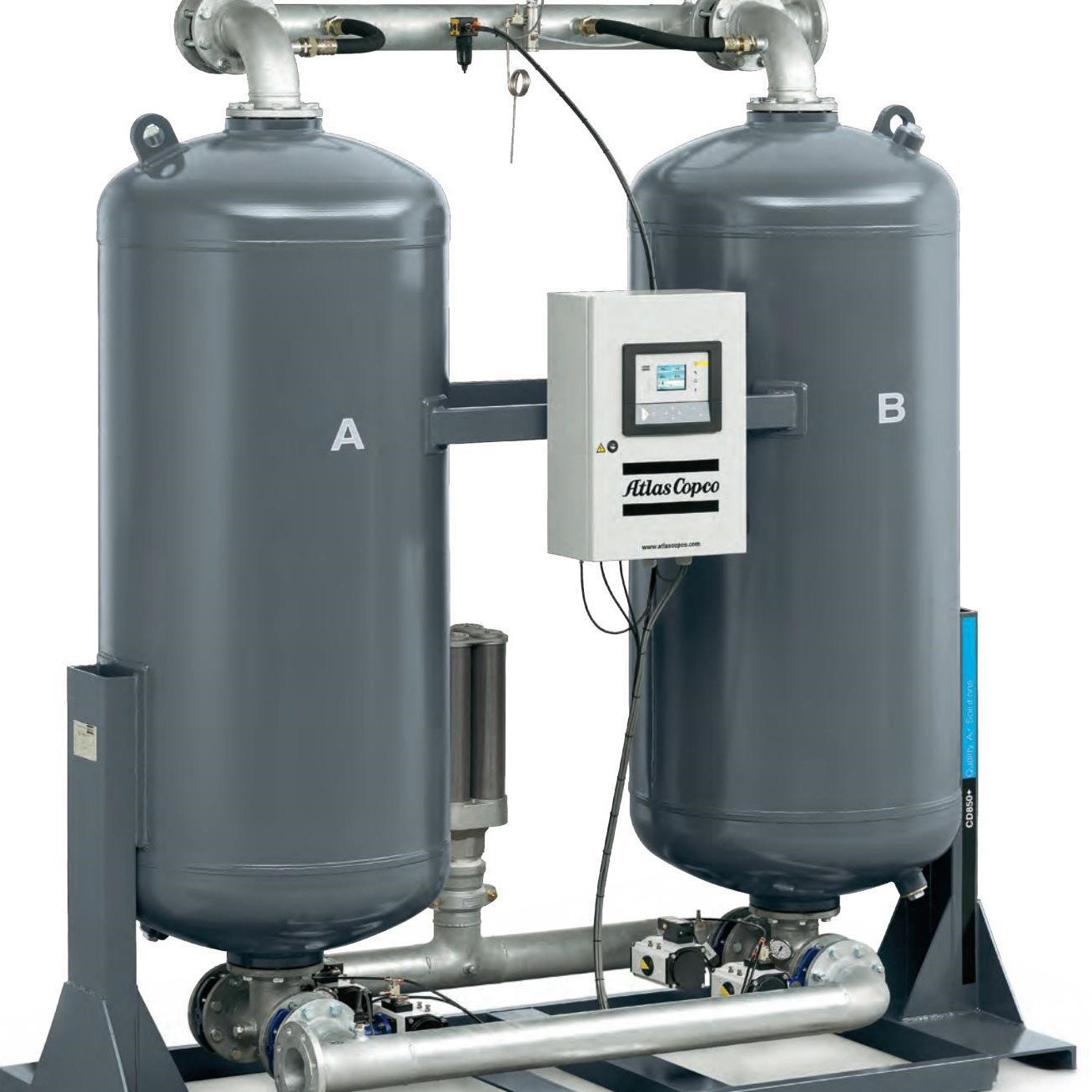
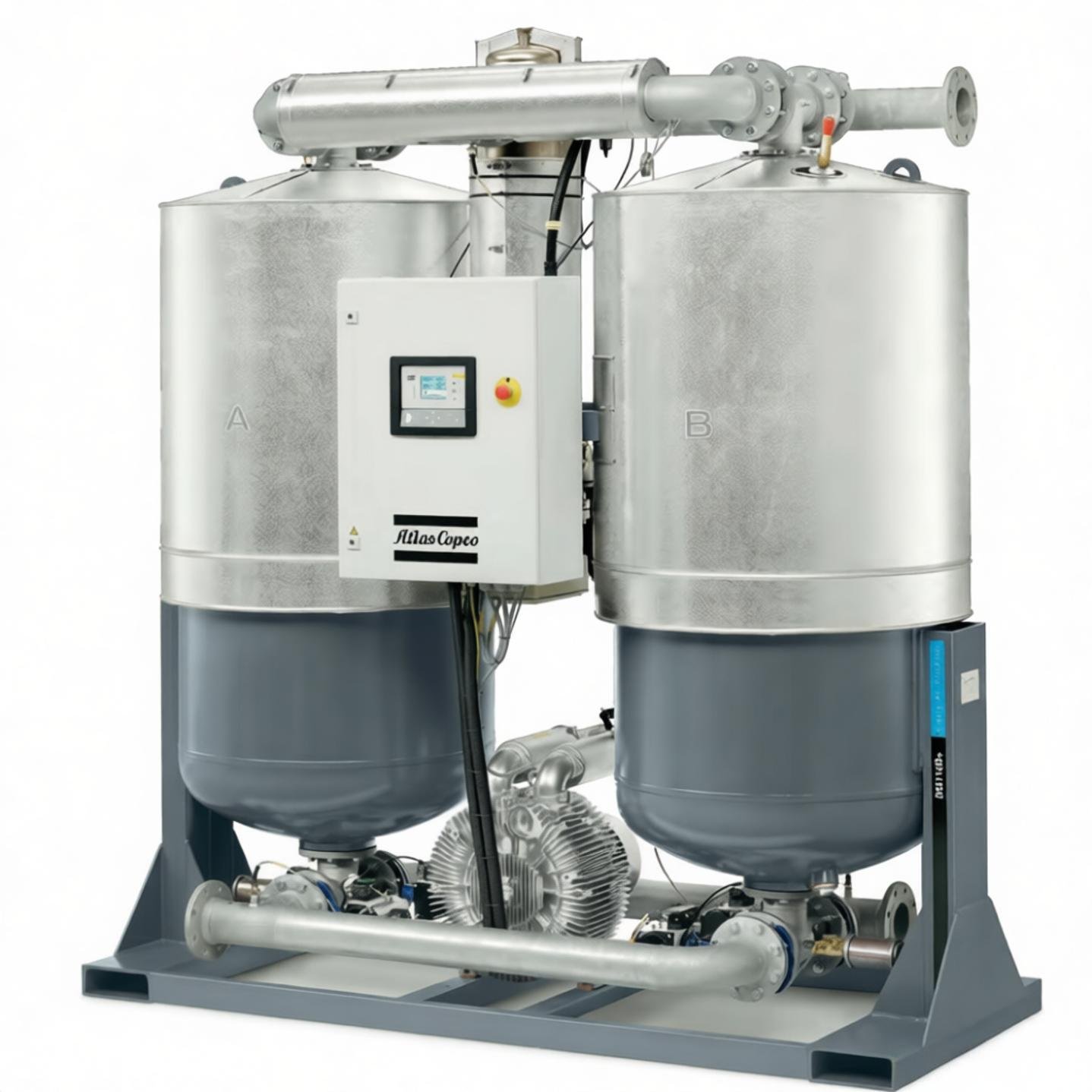
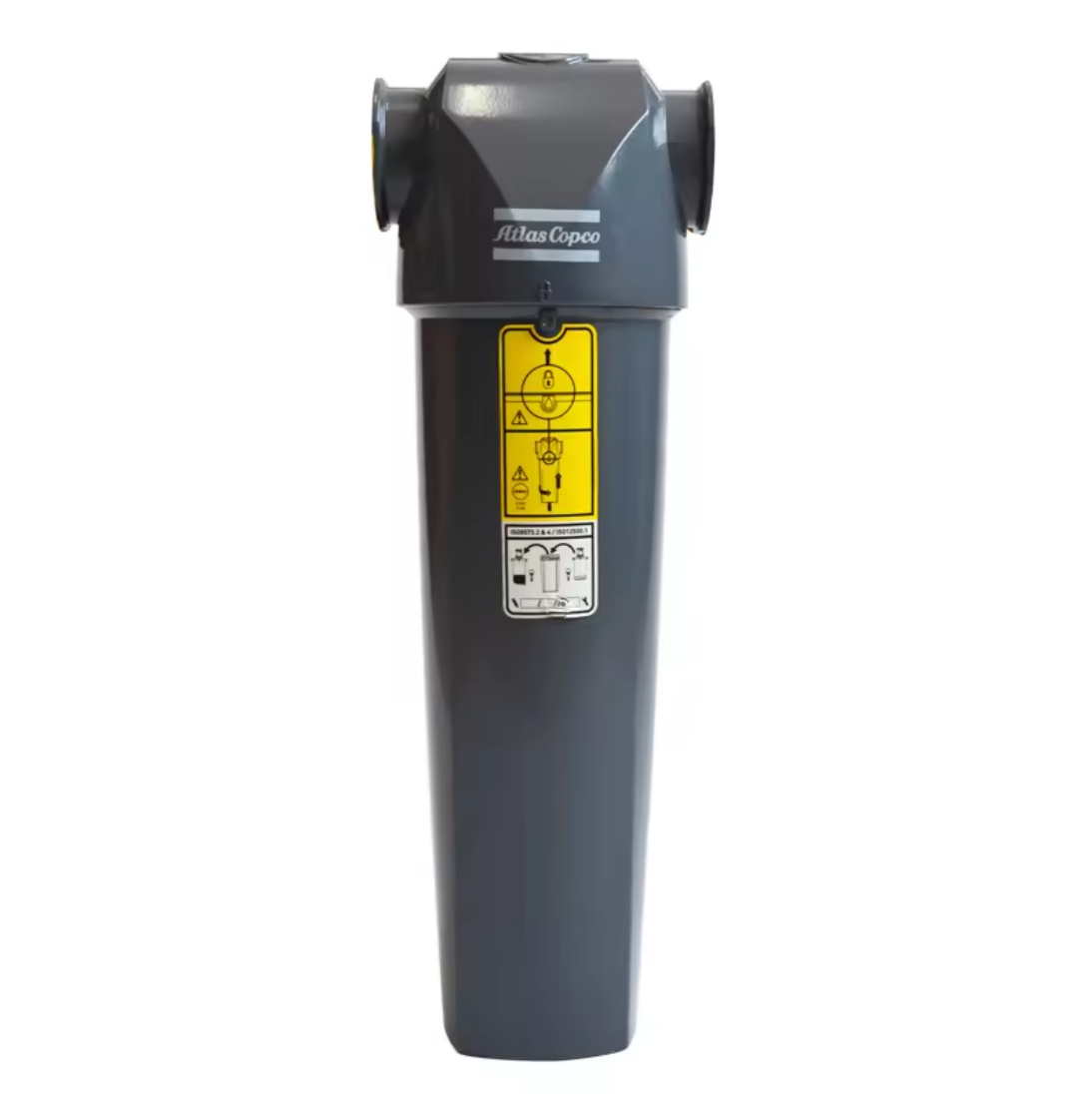
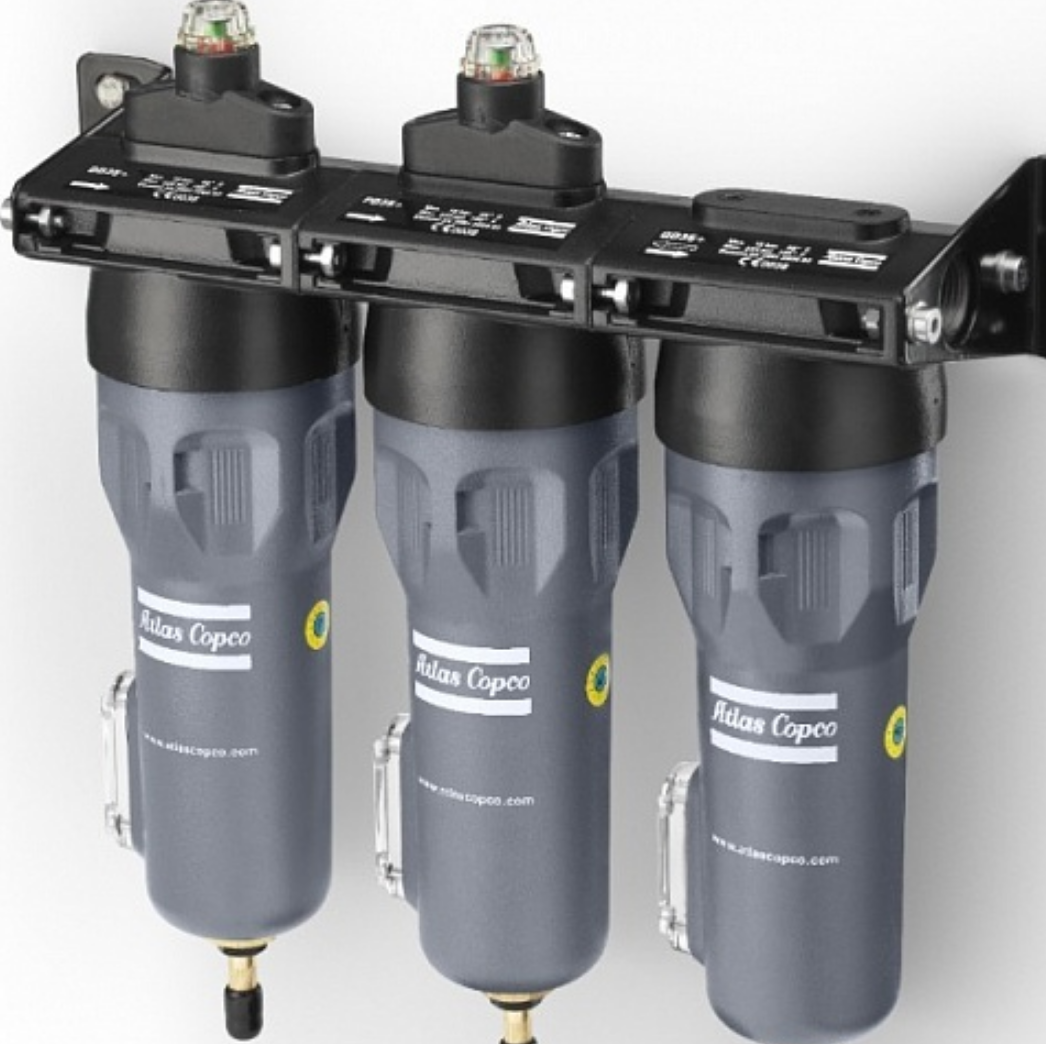
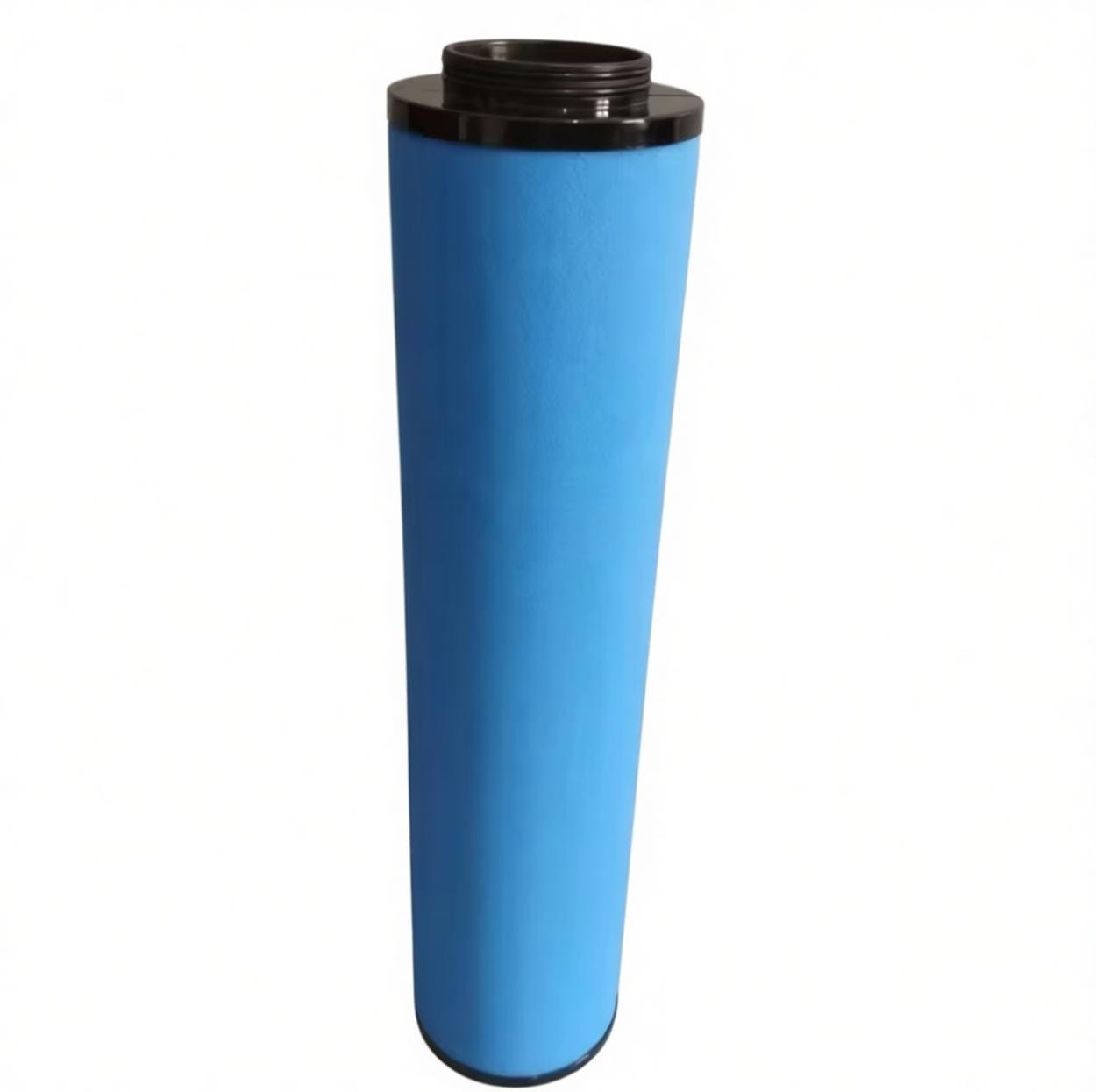
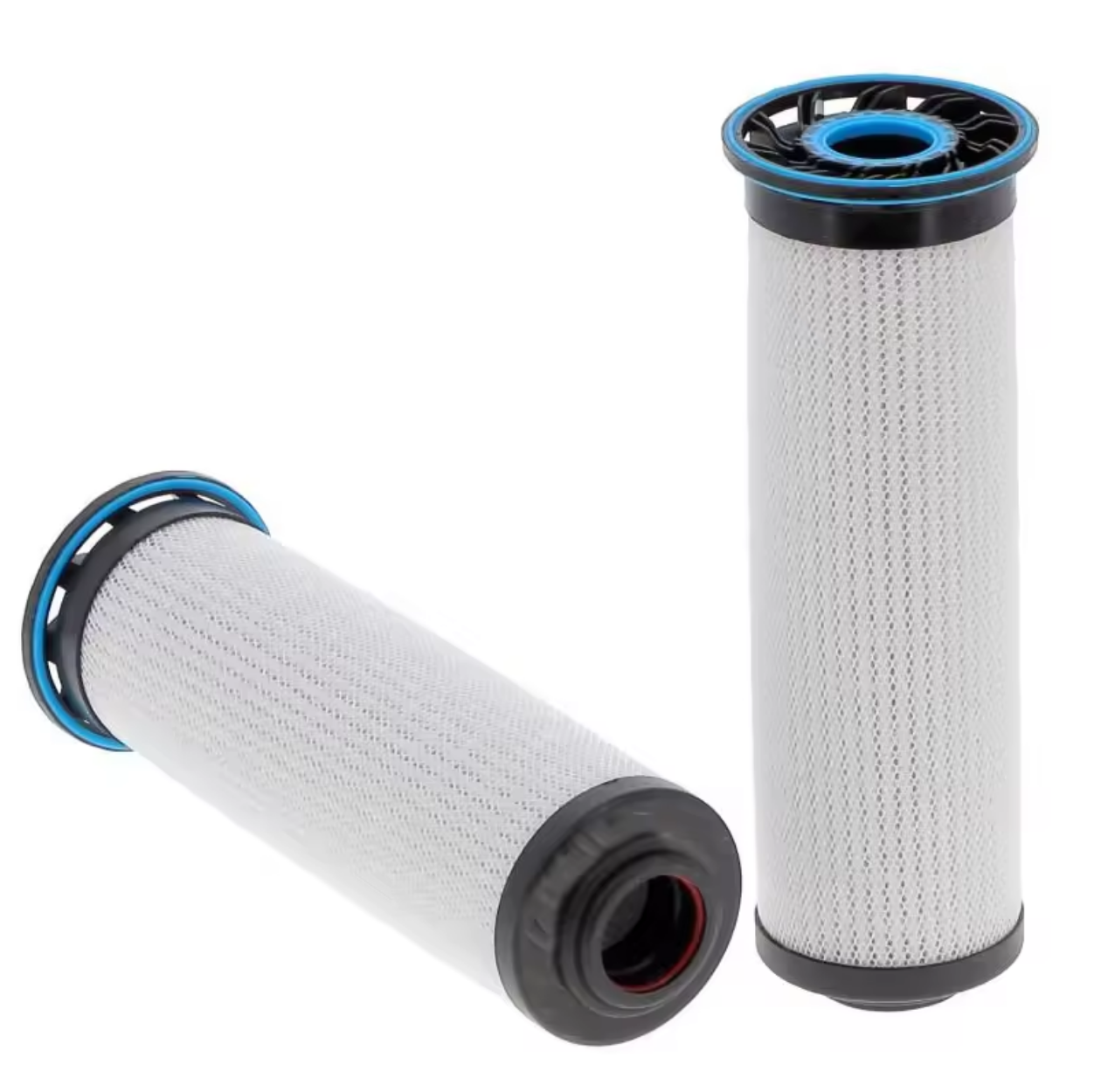
A desiccant dryer operates by using a hygroscopic material (the desiccant) to remove moisture from compressed air. The wet air passes through a tower filled with desiccant, which captures water vapor via adsorption. Since the desiccant can only hold a limited amount of moisture, it eventually becomes saturated and must be regenerated.
Regeneration involves reversing the process to drive off the absorbed water. This is done in two main ways, depending on the dryer type:
- Heatless desiccant dryers: Use a portion of the dried compressed air as purge gas, expanded to atmospheric pressure, to regenerate the saturated desiccant.
- Blower purge desiccant dryers: Use an external blower to supply ambient air, sometimes heated, along with minimal compressed air, reducing purge loss and energy consumption.
Drying phase
1. Wet compressed air enters the active tower and flows upward through the desiccant bed, where moisture is adsorbed, producing dry air at the outlet.
Regeneration phase
2. A small amount of dry air is redirected to the offline tower. It expands to atmospheric pressure and flows through the saturated desiccant, stripping away moisture.
3. After regeneration, the tower is slowly re-pressurized to avoid pressure surges.
Tower switching
4. Once regeneration is complete, the roles of the towers are swapped— the regenerated tower becomes the drying tower, and the previously active one begins regeneration.